
In This Article
- What is a personal brand?
- Why does having a personal brand matter?
- How to build a personal brand
- Who should create a personal brand?
- What are the benefits of building a personal brand?
- How postgraduate study can help you build a strong personal brand
- Elevate your professional profile with a postgraduate qualification

Creating a personal brand is becoming increasingly essential for business professionals who are navigating today's career landscape. But what makes it so important, and how do you create a strong professional identity that sets you apart from others?
This article explores the fundamentals of personal branding, including what it is, how to build one and what benefits it can offer. You can also determine whether you need a personal brand through a short self-assessment quiz and find out how postgraduate education can help strengthen your professional image.
What is a personal brand?
A personal brand refers to how you promote your unique skills, ideals and personality in public. Similar to how businesses craft their identities through logos, visual design and brand messaging, personal branding involves choosing how to present and market yourself as an individual in both professional and everyday settings. This may include the way you communicate with others and how you express your values, beliefs and personal strengths in online and offline spaces. Whether you’re looking to build your authority within your field, attract new clients or advance your career, a strong personal brand can help align your professional image with your goals.
Why does having a personal brand matter?
Having a personal brand matters for professionals who want to stand out in today’s competitive business environment. What was once seen as relevant only to companies or entrepreneurs has now become a strategic tool for career growth and resilience across diverse fields.
As rapid technological advancements continue to reshape the way we work, it has become increasingly important to ensure your voice is heard in an interconnected world. While technology has made it easier for employers to access talent across borders, it has also increased competition. This requires you to find creative ways to communicate your strengths and establish your authority in the workforce.
A strong personal brand can address this challenge directly by making you visible and credible within your area of expertise. When you consistently demonstrate your in-depth industry knowledge and professional conduct, you may position yourself as someone worth knowing. As a job seeker, this is particularly valuable as hiring managers nowadays may review your online presence to examine not only your skill set but also your communication style, industry insights and reputation. By intentionally cultivating your personal brand, you can have more control over how you are perceived, ensuring your strengths are visible in the professional arena.
How to build a personal brand
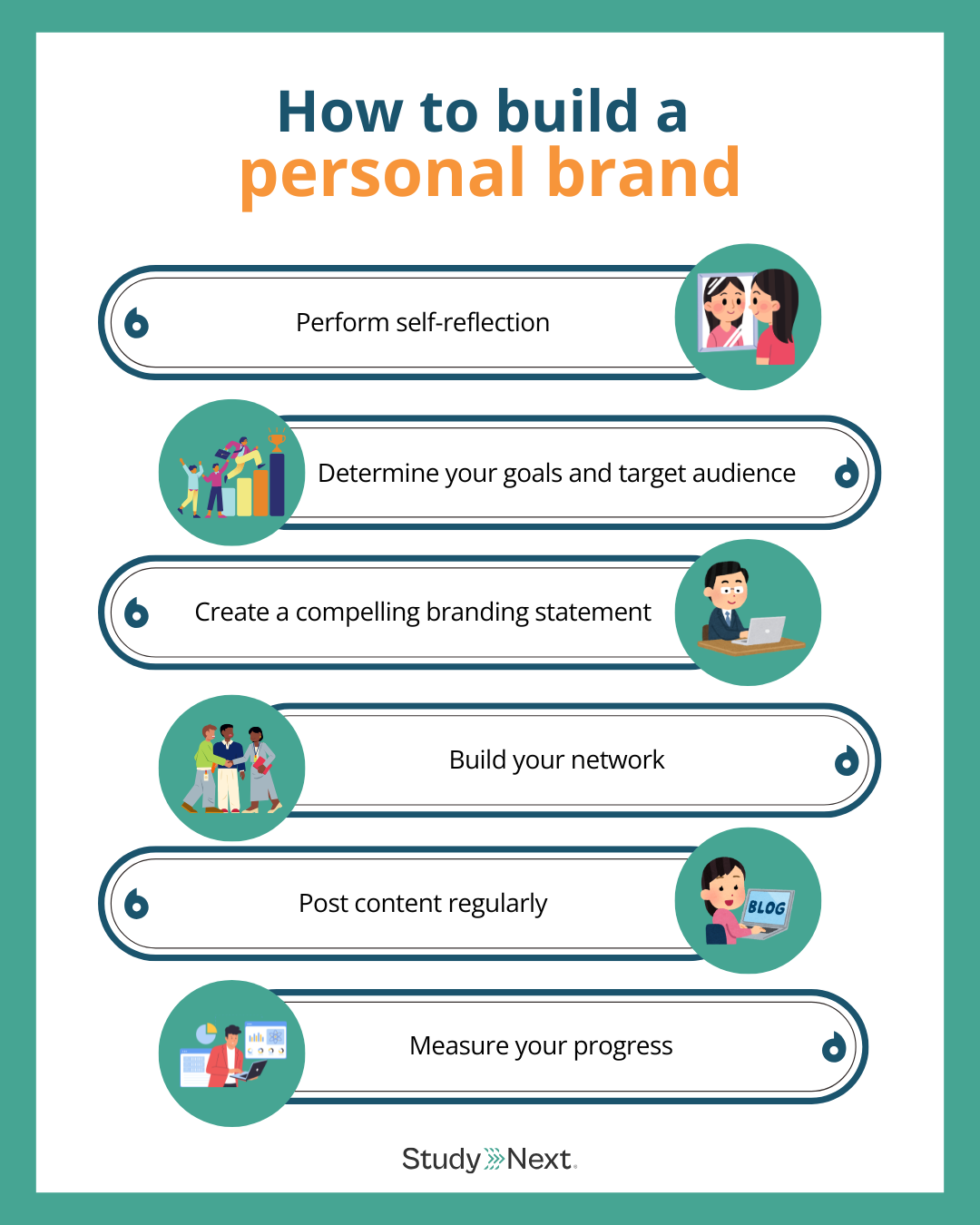
Building a personal brand often begins with engaging in self-reflection, understanding your goals and who you want to stand out to and creating a strong personal branding statement. It also involves growing your network, posting value-driven content consistently and tracking your progress. Find out what each of these steps entails below:
-
Perform self-reflection
The first step in building a personal brand is understanding who you are as an individual. Reflect on your core values, passions and strengths as well as your career aspirations and the impact you want to make in the long run. In some cases, these elements may intersect as your professional objectives may be derived from your personal interests. You can also think of what you’ve achieved in your career and reflect on whether that’s the trajectory you want to pursue moving forward. It can be helpful to create a list of your defining attributes and achievements to give you a clearer picture and to start shaping your brand identity.Beyond this internal inspection, reflect on how you would like to be perceived externally. Your best traits can remain hidden if they’re not showcased. For example, if you want to be recognised as a collaborative leader on LinkedIn, you may want to put emphasis on team accomplishments and highlight how you’ve empowered others at work. This can be done by posting about successful team projects and requesting recommendations from colleagues and other industry professionals you’ve worked with to feature on your profile. Understanding how you want to be perceived allows you to present yourself in a way that genuinely reflects your strengths and career goals. If you're unsure how you come across, seek objective feedback from those around you. You can ask friends and family about how you conduct yourself and the strengths they observe in you. This outside perspective may reveal qualities you hadn't recognised in yourself and help identify what makes you unique.
-
Determine your goals and target audience
Once you’ve defined what makes you distinctive, the next step is to set clear goals for your personal brand. Depending on your career path, this may mean promoting yourself to appeal to employers, building a business, pivoting into a new industry or establishing yourself as a thought leader within your field. Having specific goals can help give your branding efforts a sense of direction and purpose.Establishing your objectives also enables you to identify your target audience. Knowing who you want to reach allows you to tailor your messaging and choose the right platforms to engage with them. For example, if you’re growing a consultancy business, your target audience would likely be potential clients. As a consultant, your personal brand should focus on the services you offer and your past experiences working with different brands and companies. Understanding who your target audience is can help ensure that your brand resonates with the people who matter most to your professional journey.
-
Create a compelling branding statement
Your personal branding statement needs to be strong, clear and authentic to describe the essence of your professional identity. It should be a short and memorable summary of your skills, passions and career objective. A well-crafted statement can help your audience understand who you are and what you bring to the table. It can also be used whenever you present yourself professionally in both online and offline settings, ensuring that your message remains consistent across different platforms and interactions.Here’s an example personal branding statement you might find on LinkedIn:
“Hi, I’m Daniel, an IIBA-certified business analyst with 8+ years of experience helping organisations translate complex data into actionable insights that empower smarter decisions. I’m passionate about bridging the gap between technology and business strategy and am seeking strategic consulting opportunities to support companies in navigating digital transformation.”
When developing your statement, consider the audience you want to appeal to, whether that’s potential employers, industry peers or clients. Reflect on which skills and experiences would resonate with them the most and build your statement around those strengths. It can also be helpful to look at other personal brand examples from established professionals in your industry to give you an idea of how you can make yours stand out.
A personal branding statement isn’t static and can evolve over time, just like your professional aspirations. As you gain experience, develop new skills or shift your career focus, your statement should grow with you. You can review it from time to time and refine it to reflect your ongoing career journey.
-
Build your network
One of the core purposes of building a personal brand is to make yourself visible and discoverable to the people who matter for your career. To improve this visibility, it’s important to engage with people within and beyond your industry. Not only can you gain exposure to diverse perspectives, but you may also unlock strategic professional opportunities that can enhance your personal brand.You can gain connections in person by attending networking events, joining professional associations and participating in industry conferences. When you talk to other professionals face-to-face, you can foster deeper connections in ways you may not be able to in online interactions through body language and tone of voice. Even having a casual conversation can offer an opportunity to expand your reach and make yourself known to others.
You can also build your personal brand at work by actively engaging with the people you meet within and beyond your company, including colleagues, managers, clients and other stakeholders. Whether you’re collaborating on projects, sharing ideas in a meeting or chatting casually by the coffee machine, the way you conduct yourself contributes to how others perceive you. By cultivating positive relationships with them, you can enhance your reputation and expand your network, which are fundamental elements of a strong personal brand.
Engaging with others on online platforms, such as LinkedIn, can also be equally important, especially in today’s digital-centric world. Many professionals tend to focus on building a strong LinkedIn presence to elevate their personal brands. Besides directly sending connection invites to other professionals, you can share industry insights, leave comments on other professionals’ posts and join discussions that can demonstrate your expertise. Being consistent with online engagement can help you reach a wider audience and establish yourself as a credible voice in your professional community.
-
Post content regularly
Besides staying connected with others, it’s also crucial to be consistent in demonstrating your expertise. An effective way to do this is to create and share value-driven content tailored to your niche and expertise across various platforms where you’re active, which can include social media, websites or even podcasts. You can create original content like blog posts, articles, short-form videos or opinion pieces on platforms like LinkedIn. For example, Daniel could share his analysis of how businesses are implementing artificial intelligence in their operations, connecting his business analyst expertise to the latest industry developments.Posting regularly can help keep you visible and encourage higher engagement from your audience. Social media algorithms may also reward this pattern as they tend to amplify content that resonates with many users. To stay disciplined, you can consider setting up a clear posting schedule, such as two to three posts per week, to maintain momentum without overwhelming yourself. Consistently sharing value‑driven content can help strengthen your authority and enhance your personal brand in the long run.
-
Measure your progress
Personal branding is an ongoing process that can evolve alongside your career. To find out if your efforts are paying off, you can tangibly measure your progress by checking engagement on your posts, profile views and number of followers on social media. These metrics can provide valuable insights into how your brand is being received. You can also seek opinions from trusted peers or mentors about how they perceive your brand. Their perspectives can help give you a sense of whether it aligns with your intended image. By learning from metrics and constructive feedback, you may find opportunities to continuously refine your approach and adjust what isn’t working. This ensures that your personal brand remains updated and relevant in the evolving professional landscape.
Who should create a personal brand?
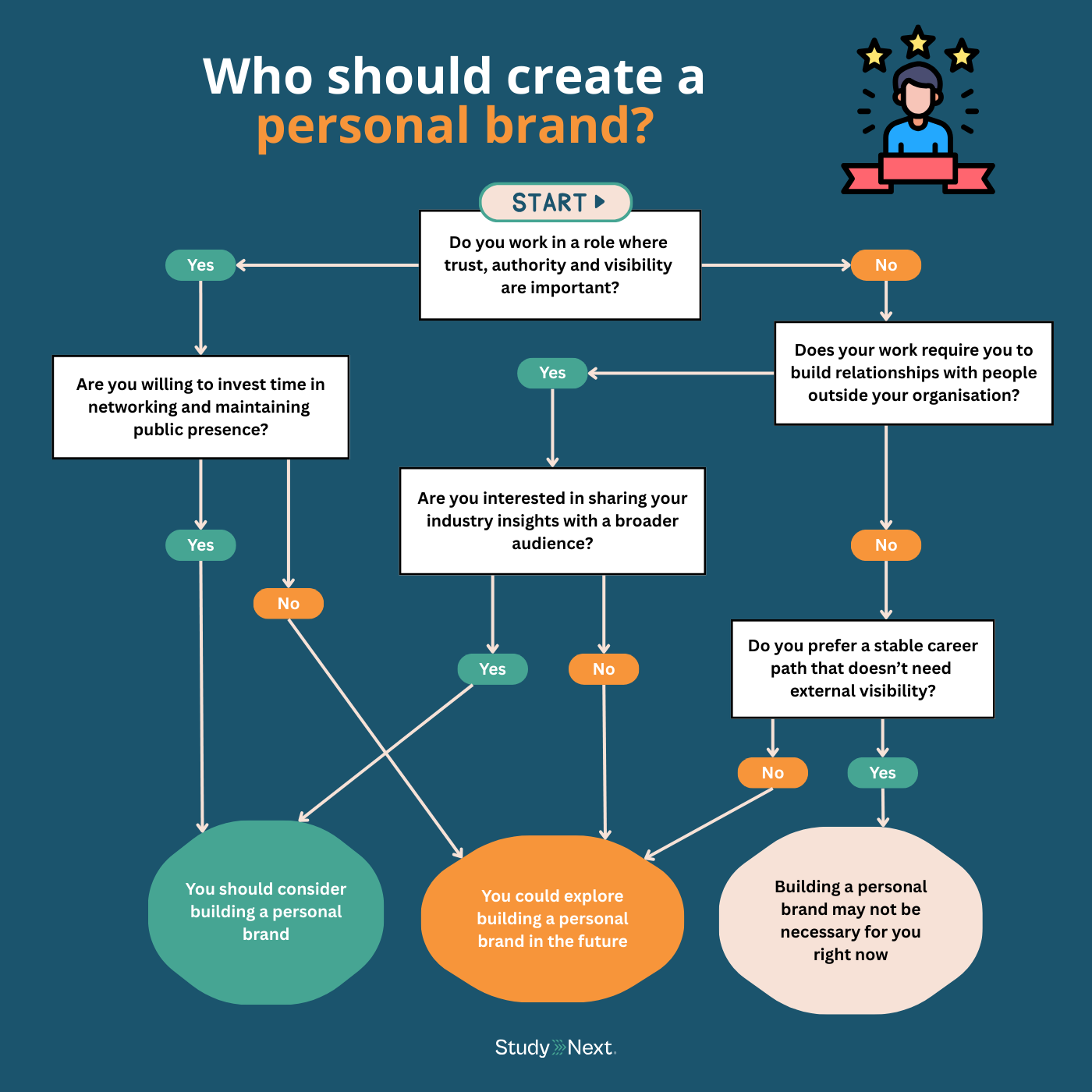
Personal branding can be valuable to professionals who are currently in or aspiring to enter roles where visibility and reputation play a big role in career success, such as entrepreneurs, consultants and freelancers. Having a strong professional presence can help these individuals attract clients and business partners, build trust and display their credibility. Similarly, those aiming for more senior or leadership roles, especially in competitive fields, can also benefit from cultivating a positive reputation through a well‑defined personal brand.
However, not every role requires a carefully crafted brand. Positions that are more technical, such as accountants, software developers or actuaries, may rely more on skills and qualifications rather than external visibility. Ultimately, the need to develop a personal brand depends on your professional objectives. It’s important to assess your career path and decide whether investing in one can support the professional outcomes you want to achieve.
If you’re not sure whether you should build a personal brand, you can take this short quiz below to help provide you with more insight.
What are the benefits of building a personal brand?
Building a personal brand can offer a wide range of benefits, such as creating a favourable first impression, positioning you as an expert within your field and helping you to differentiate yourself in a competitive market. It may also lead to valuable networking and professional opportunities that can support your long-term career growth. Learn more below:
- Creates a positive first impression
In today’s interconnected world, it’s easier than ever for people to find information about you online. Potential clients and employers may review your digital presence before deciding to engage. A strong personal brand that highlights your expertise, values and professional achievements can help build trust and leave a favourable first impression.
- Establishes yourself as an expert
Developing a personal brand can help place yourself as a trusted authority within your field. By consistently sharing your insights and demonstrating your knowledge in public spaces, you can gradually build a reputation not only among your target audience but also within the wider professional community. When more people recognise your expertise and value your perspective, you may unlock opportunities, such as interview requests or invitations to contribute to industry projects, that can further reinforce your authority.
- Helps you stand out
When you’re competing with other professionals with similar skills and educational backgrounds, a well-curated personal brand can help set you apart from others in the job market. Having a visible public presence allows hiring managers to gain a deeper understanding of your unique qualities and experiences beyond your resume. Similarly, a strong personal brand can be vital for entrepreneurs and individuals with side hustles since you're competing for clients and market share. Whether you’re competing for jobs or customers, your ability to communicate your strengths and accomplishments in today’s oversaturated market can become the deciding factor that helps people choose you over others.
- Unlocks more networking opportunities
Personal branding can help enhance your networking opportunities as it often involves actively engaging with other professionals. Besides initiating interactions from your end, individuals who resonate with your content or expertise may also reach out to connect with you. These valuable connections may lead to other opportunities like job referrals, project collaborations or invitations to industry events.
- Creates more professional opportunities
One of the primary purposes of building a personal brand is to support your professional growth. By curating a clear and consistent brand, you can make yourself more discoverable and potentially access opportunities that can contribute to your professional development.
For example, recruiters searching for talent with specific skills may come across your profile if your expertise aligns with their needs. If you’re an entrepreneur, a personal brand can help prospective customers learn about your products or services. It can also encourage businesses to get to know you and possibly reach out with collaboration opportunities. For freelancers and consultants, a consistent brand signals professionalism and reliability to potential clients. You can also display testimonials from past clients to strengthen your credibility, which may make it easier for new clients to trust and choose you.
How postgraduate study can help you build a strong personal brand
Postgraduate courses offer structured frameworks that can help you gain advanced skills to build and amplify your personal brand strategically. Programs in marketing and digital marketing often teach you core branding principles that can be applied to self-promotion directly. If you have aspirations to launch a business, especially where you’re the face of it, entrepreneurship courses can empower you to pitch your ideas and promote your offerings effectively. Leadership programs are designed to improve your communication skills and cultivate a strategic mindset, which can offer a solid foundation for a compelling personal brand.
Below are examples of postgraduate courses across these fields. You’ll also gain insight into how specific units in each course can help you develop the skills needed to create a strong and memorable professional narrative:
Graduate Certificate of Digital Marketing – Curtin University
This course delves into the fundamentals of various digital platforms, strategies and analytical methods. In the Social Media Marketing unit, you’ll learn how social media platforms are leveraged in marketing communication strategies to achieve business goals. By understanding how to use it effectively, you can apply this knowledge to market yourself as an individual on social media.
Another unit you’ll take on is Storytelling and Digital Media, which explores the role of storytelling in engaging with different audiences. It also addresses the ethical concerns of digital communication, particularly about reputation in the digital landscape. This can help you gain an understanding of how to craft compelling stories that can resonate with various audiences while strategically managing your online reputation.

Learn digital marketing online to stay up to date with rapid advancements in tactics, strategies and processes.
Graduate Diploma in Entrepreneurial Growth – Flinders University
In this course, you can gain hands-on experience in launching meaningful social or economic ventures that can drive organisational transformation. During your studies, you’ll be immersed in a start-up ecosystem through the Accelerating Start-ups: Build, Launch and Grow Ideas for Impact unit. This immersive program aims to help you develop an entrepreneurial mindset to bring ideas to life, with opportunities to work with mentors, participate in workshops and interact with expert speakers. You can also build your connections with like-minded peers and industry experts, which may boost your visibility and support the growth of your personal brand.


The course is designed to equip students with the knowledge, skills and attitudes required to support entrepreneurialism.
Master of Marketing – University of Technology Sydney
The curriculum of this master’s degree combines creativity with technology to help you get ahead in the marketing sector, focusing on topics like customer experience, data analytics and digital marketing. One of the core units you’ll take is Marketing Communications, which explores theories and frameworks in developing marketing communication campaigns. You can build your skills in integrating market and audience insights, navigating the fragmented media landscape and crafting persuasive communication strategies. Developing knowledge in these areas can also guide you in communicating effectively to strengthen your professional identity.
Another core unit that can help you refine your personal brand is the Brand Management unit, which delves into the fundamentals of managing a brand, including brand elements, brand audit and positioning. Through case studies and simulations, you’ll learn how to develop and maintain brand equity, which can be vital for your own professional brand.


The course is aligned with research-inspired, practice-oriented education. It is designed to equip students with skills that foster their lifelong learning and inquiry in their personal development and professional practice in marketing.
Master of Marketing Communications – University of Melbourne
This program is designed to equip you with hands-on skills in content marketing, public relations, strategic communications and advertising, preparing you to adapt and thrive in today’s rapidly evolving digital era. You’ll have the opportunity to choose electives that can help you build your brand, such as the Branding unit, where you’ll complete an in-depth brand management project using a real-world organisation as a case study.
You can also take the Writing and Editing for Digital Media elective, which aims to equip you with practical skills for creating content across diverse online platforms and genres, such as websites, social media and search engines. This can help you learn how to tailor and optimise your personal brand messaging on different digital channels.
Besides curating your online presence, your personal brand is also shaped by how you present yourself in real life. To strengthen your public speaking abilities, you may choose the Business and Professional Communications elective, which explores the foundations of effective communication across diverse business and professional settings. In this unit, you’ll learn the principles of plain English and public speaking, with opportunities to apply these skills in practice.

Designed for those with a keen analysis of emerging technology and their impact on modern marketing and communications.
Master of Business Administration – University of Queensland
This program gives you the chance to integrate your own workplace projects for hands-on learning, collaborate with industry clients to solve real-world challenges or pursue entrepreneurial ventures. After graduation, you’ll continue to receive invitations to networking and professional development events, which can help you expand your personal brand.
The core units in this course are designed to strengthen your ability to market yourself as a leader and shape a distinctive personal brand. For example, the Resonant Leadership unit explores the ethical, social and cultural dimensions of executive leadership. Studying this unit can help you develop the confidence needed to excel in these areas, which is essential to how you’re perceived and trusted as a leader.
The Strategy: From Design to Practice unit teaches you how to create strategies and translate them into action at both business and corporate levels. You’ll learn to assess a company’s current approach, use those insights to design innovative strategies and reflect on your own growth as a future strategic manager. By combining practical skills with a strategic mindset, this unit can help you build a credible personal brand at senior levels, shaping you to become a leader who not only seeks to create impact but also embodies it.


Gives students the leadership agility to navigate an ever-changing business landscape and drive outcomes in their industry.
Elevate your professional profile with a postgraduate qualification
In today’s competitive job landscape, finding ways to stay ahead is essential. Postgraduate study offers a great opportunity to strengthen your expertise, build your connections and demonstrate a clear commitment to professional growth. These courses can also equip you with the tools and skills to curate a strong personal brand. Level up your career today and discover diverse postgraduate business courses in Australia.