
In This Article
- What is social commerce?
- How social commerce is reshaping the Australian marketing landscape
- Key components of social commerce
- Benefits of social commerce for businesses
- Skills marketing professionals need in social commerce
- 5 steps in building an effective social commerce strategy
- How postgraduate study can help you thrive in social commerce
- Get ahead in social commerce with a postgraduate course

Online shopping has come a long way from opening a browser and searching for a product on an online store. Today, a customer can discover, evaluate and buy a product within their favourite social media app as they scroll through their feed. This signals a significant change in where and how purchase decisions are made. Current and aspiring marketing professionals need to adapt accordingly to respond to this growing trend.
This article explores what social commerce is, how it has grown in Australia, the key features that define it and the advantages it offers businesses. You'll also discover the skills you typically need to thrive in this space, practical steps for building a social commerce strategy and how postgraduate study can help advance your marketing career in this evolving field.
What is social commerce?
Social commerce refers to the buying and selling of products and services directly through social media platforms. Unlike traditional e-commerce, which may rely on social media to drive traffic to external websites, social commerce keeps the entire customer journey, from browsing products to completing a purchase, within a single social platform.
This integrated shopping experience blends both content consumption and commercial activity in the same digital space. Today, some of the most popular social commerce platforms include Instagram, TikTok, Pinterest and Facebook. Each has introduced in‑app shopping features that enable brands to deliver seamless purchasing experiences, allowing users to shop without ever leaving the app.
How social commerce is reshaping the Australian marketing landscape
Australia's social media landscape provides a positive environment for social commerce to thrive. According to We Are Social and Meltwater’s Digital 2025 report, there were 20.9 million social media users in Australia as of January 2025, representing nearly 78 per cent of the total population. The report also found that researching brands and products on social networks ranked as the third most common online activity among Australians aged 16 and over. These findings suggest a valuable opportunity for businesses to capitalise on this emerging trend to boost their presence on social media and convert passive browsers into active shoppers.
The commercial impact of this consumer behaviour is already substantial and continuing to grow. Australia Post's eCommerce Industry Report 2025 found that social commerce in Australia reached $4.9 billion in 2024 and is projected to climb to $8 billion by 2029. The same report also found that 74 per cent of Gen Z and millennial consumers shop via social media, primarily on Instagram, Facebook and TikTok, with almost half of them doing so on a weekly basis. This indicates that social platforms have effectively become an important retail environment for brands targeting younger demographics.
For marketers, these findings highlight how consumers are increasingly relying on social platforms not only to guide their purchase decisions but also to complete transactions directly within those channels. By leveraging this trend effectively, businesses can better position themselves to succeed in this online environment.
Key components of social commerce
Some key features that are typically prominent in social commerce include shoppable content and in-app purchasing, visual content, user-generated content, collaborations with content creators, narrative-driven marketing and live shopping. These elements often play a vital role in boosting engagement and driving sales, helping brands thrive in the social space. Explore each component in more detail below:
- Shoppable content and in-app purchasing
Shoppable posts, product tags and in-app storefronts allow brands to turn content into a sales opportunity. Commerce platforms like Instagram Shop, TikTok Shop and Pinterest Shopping enable businesses to sell products and allow users to complete purchases without being redirected to an external site.
- Visual content
High-quality images and short-form video can play a big role in capturing attention in a crowded feed, keeping users engaged and communicating a product's value quickly. Social platforms like TikTok and Instagram Reels may also amplify this impact, as authentic, relatable visuals may drive stronger purchase intent than overly polished campaigns.
- User-generated content
User-generated content (UGC) refers to content created by customers, such as product reviews, unboxing videos and testimonials. UGC can be a powerful trust signal in social commerce because it demonstrates a product’s value through the authentic voices of everyday consumers rather than celebrity endorsements. This type of genuine, relatable content may resonate more strongly with potential buyers.
- Collaborations with content creators
It’s common for brands to collaborate with influencers and content creators in social commerce. By working with creators who have established audiences and credibility in specific niches, brands can reach highly targeted communities. These collaborations can range from sponsored posts to longer-term ambassador relationships. They may also be highly effective when the creator's values and aesthetics align with the brand.
- Narrative-driven marketing
Storytelling is often used to strengthen brand presence, which plays an important role in social commerce. Instead of focusing on promoting products, this approach emphasises narratives that build emotional connections with audiences, while focusing on the brand’s mission and values. This may encourage a deeper consumer relationship that goes beyond transactions, which can contribute to stronger brand loyalty.
- Live shopping
Live shopping, where brands showcase and sell products in real time through livestreamed video, is becoming one of the fastest-growing elements of social commerce. It typically involves a presenter demonstrating and promoting a product’s features as well as responding directly to customer questions. If viewers are interested, they can click on the featured item and complete their purchase during the stream, creating a seamless blend of engagement and shopping convenience.
Benefits of social commerce for businesses
Social commerce can offer businesses a wide range of advantages, including a streamlined purchasing journey, stronger consumer engagement, greater brand loyalty, richer data and insights, improved profit margins and the ability to leverage seasonal and trend-driven opportunities. These benefits can enhance your company’s competitiveness and drive profitability. Discover how each of these strengths can work for your business below:
Streamlined purchasing journey
Social commerce can help minimise the gap between product discovery and purchase. By integrating shopping directly into social platforms, customers can move from browsing to checkout in just a few clicks. This reduction in steps can help boost conversion rates, as they don’t need to go to the brand’s website to complete their purchase. Instead, customers can shop without leaving their favourite social apps, creating a fast and seamless experience that encourages repeat engagement.
Stronger consumer engagement
Interactive shopping experiences on social platforms often include livestreams, online polls and augmented reality filters that let users virtually try on products. These social commerce examples show how brands can transform shopping into an engaging activity rather than a passive transaction. By giving consumers opportunities to interact, explore and personalise their journey, brands may capture attention for longer periods and encourage active participation, which can build stronger customer engagement.
Greater brand loyalty
Through comments, shares and UGC, businesses can nurture communities where customers feel genuinely heard and valued. When customers feel part of a community, they may be more likely to advocate for the brand and even contribute their own content on social media. This collective involvement can help strengthen trust and foster loyalty, ultimately encouraging long-term customer retention.
More data and insights
Social platforms typically collect vast amounts of user data, including interests, behaviours and demographics, which businesses can leverage to deliver personalised content. This can help you utilise your marketing efforts efficiently, reaching audiences who are more inclined to engage with the brand. You can also analyse audience interactions, such as shares, likes and purchases, to better understand consumer preferences and adjust social commerce strategies for better outcomes.
Enhanced profit margins
By combining higher engagement and seamless shopping experiences, social commerce can serve as a great avenue for business profitability. Customers may be more likely to complete a purchase when the process is convenient and integrated into platforms they already use daily. Over time, the combination of convenience and engagement can help boost immediate revenues and encourage repeat transactions, contributing to increased profit margins for businesses.
Seasonal and trend-based opportunities
Social commerce enables brands to capitalise on holidays, seasonal sales and viral trends by launching tailored campaigns that position their products in ways that feel timely and relevant. This may allow you to resonate better with your audience, maximise visibility and potentially drive more sales. By staying informed about shifting consumer behaviours and ongoing social media trends, you may boost short-term performance while strengthening your brand’s relevance in a fast-moving digital marketplace.
Skills marketing professionals need in social commerce
To thrive in social commerce marketing, it’s valuable to develop key skills like search engine optimisation, data analytics, customer engagement, social media management, content strategy and creation, creative thinking and communication. These capabilities can help you design and execute effective strategies, from initial planning through to performance monitoring. Find out how below:
- Search engine optimisation (SEO): In social commerce, this skill involves understanding how to optimise product descriptions, hashtags and captions to align with user search intent. Strong SEO skills can help increase visibility, drive organic traffic and ensure that your content reaches the right audience at the right time. Some social media platforms are also enhancing their SEO functionality. For example, Instagram’s July 2025 update allowed public content from professional accounts to start ranking in external search engines like Google, making effective SEO practices vital for boosting discoverability beyond the app.
- Data analytics: To make informed decisions and analyse the effectiveness of social commerce strategies, you should be comfortable working with data to understand key performance indicators (KPIs) like engagement rate, click-through rate and conversion rate. This allows you to refine your strategy to boost performance.
- Customer engagement: Social commerce often serves as a conversation between a brand and its audience. It’s important to be skilled at fostering genuine engagement and understanding consumer sentiments from online comments and messages. This allows you to align your approach to better meet your audience’s needs and help turn passive followers into loyal customers.
- Social media management: As social commerce takes place on social platforms, it’s essential to grasp how each one operates, especially when your strategy involves multiple sites. This typically requires technical knowledge on how to set up your e-commerce infrastructure, along with an understanding of optimal posting times and content types that resonate most on each platform.
- Content strategy and creation: For marketers in social commerce, creating content that’s both engaging and commercially effective is a core skill. Developing a content strategy that balances business objectives with customer interests enables you to deliver value while driving profitability. Depending on your role, you may also be actively involved in the content creation process, such as producing videos, writing scripts, designing visuals or crafting copy for social media posts.
- Creative thinking: Creative thinking is a vital skill in social commerce, particularly in an oversaturated market where standing out is essential. This competency enables you to explore unconventional approaches to promoting your offerings and persuading audiences to choose your brand, which may ultimately help convert them into active shoppers.
- Communication: Beyond engaging with current and potential customers, you may frequently work together with cross‑functional teams to ensure the successful execution of social commerce strategies. Strong communication skills can help ensure your messaging is clear and persuasive to intended audiences and foster effective collaboration among internal stakeholders as you work towards achieving shared business goals.
5 steps in building an effective social commerce strategy
The key stages in crafting an effective social commerce strategy include establishing your goal and target audience, choosing the right social platforms, building a strong content strategy, setting up your in-app commerce infrastructure and continuously updating your strategy. Following these steps helps brands remain competitive and relevant in the fast-evolving social commerce landscape. Learn more below:
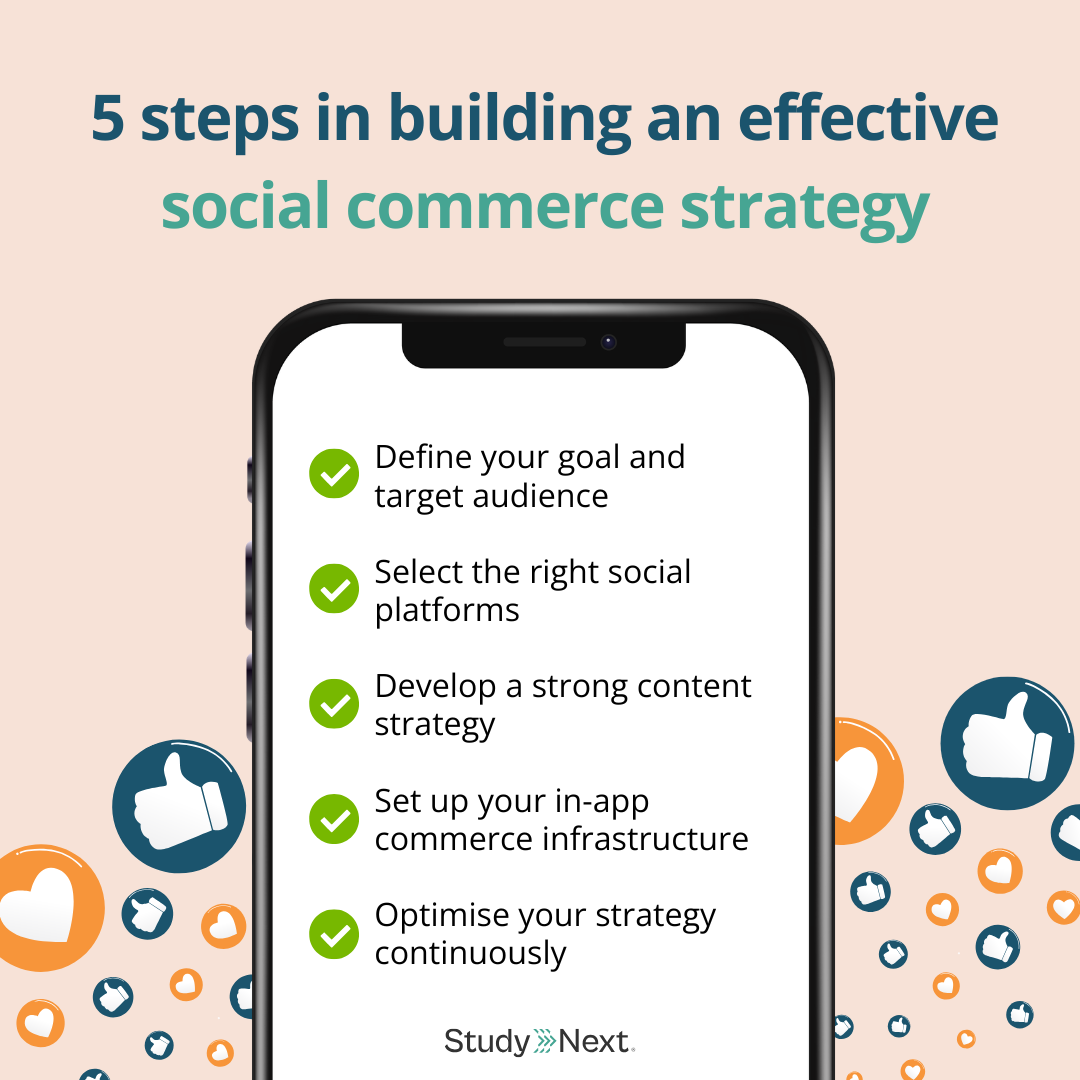
Define your goal and target audience
Every strategy should begin with a clear goal, whether you’re aiming to drive direct sales, build brand awareness or foster a loyal customer base. Defining your objective is important, as each goal may require its own approach. For example, a campaign focused on awareness may prioritise increasing impressions, while a sales-driven campaign would likely target conversions.
Understanding your audience is also vital at this stage. You can uncover valuable insights about your potential customers by analysing their demographics, the social platforms they use and how they usually engage with content. With this knowledge, you can make more informed decisions and develop strategies that can generate maximum impact.
Select the right social platforms
Not every social commerce platform will be the right fit for every brand. The platforms you invest in should be determined by the products or services you offer and where your target audience typically spends their time.
For instance, a homeware retailer may find higher chances of success on Pinterest, where users actively search for home décor inspiration, while a makeup brand targeting Gen Z consumers may achieve stronger results on TikTok through engaging formats such as “get ready with me” videos and product reviews. By focusing on the platforms that best match your audience and offering, you can allocate resources more strategically and increase the likelihood of achieving a higher return on investment.
Develop a strong content strategy
Once you understand your audience and platforms, you need to develop a clear content plan that can drive your social commerce activity. This typically includes deciding on content formats, posting schedule and tone of voice. Striking the right balance between brand-created content and UGC is also essential for building authenticity and relatability with your audience.
For instance, a fashion brand can showcase polished studio photography of its clothing in Instagram carousels to highlight product details. At the same time, it can share short-form styling videos on TikTok, such as outfit inspiration ideas, and repost customer-generated “outfit checks” to keep the community engaged and involved. Designing a strategy that connects with your audience while highlighting the strengths of your offerings can significantly help enhance social commerce performance, turning leads into conversions.
Set up your in-app commerce infrastructure
An effective social commerce strategy relies on smooth technical execution. Once your content plan is in place, you need to ensure the shopping experience itself is seamless. This may involve accurately tagging products in your posts, keeping your catalogue updated and testing the checkout process from the customer's point of view. A smooth purchase journey can play a key role in converting audience engagement into revenue.
Optimise your strategy continuously
Consumer behaviour, platform algorithms and social commerce trends may shift rapidly in today’s digital landscape, making it essential for marketers to continuously review and refine their social commerce strategies. Establishing clear KPIs can provide a solid framework for assessing performance and identifying areas for improvement.
Optimisation may involve experimenting with new content formats, testing different audience segments or adjusting posting frequency to better align with user habits. Continuously adapting helps your strategy to remain agile, relevant and ready to deliver success in the long run.
How postgraduate study can help you thrive in social commerce
Refining your marketing expertise through advanced study can be a transformative way to progress your career. Many postgraduate programs in marketing and digital marketing include units that not only deepen your fundamental marketing knowledge, but also offer specialised units on social media marketing, helping you build proficiency in areas like social commerce. Earning this qualification can also signal your commitment to developing and strengthening your marketing acumen.
For example, the Master of Marketing at Swinburne University of Technology includes a specialisation in social media, designed to strengthen your ability to boost engagement and track results effectively. With units like Writing for Social and Mobile Media, Social Media Branding and Engagement, as well as Social Media Analytics, you can develop practical skills in crafting persuasive digital copy, planning strategies and creating a blog.


Develop advanced marketing capabilities across consumer behaviour, digital marketing, customer experience, strategy and data-led decision-making.
Monash University’s Master of Applied Marketing features a Social Media Marketing elective unit that examines the role of new media in digital marketing. This unit explores the social media landscape, including tools, technologies and consumers. You’ll learn how to engage with stakeholders through social platforms, how consumer behaviour may change and be influenced by social media trends and how businesses can adapt to meet evolving customer wants and needs in this space.


Develop an extensive toolkit of techniques and frameworks necessary to become a capable, responsible and effective marketing leader.
One of the core units in the Graduate Certificate of Marketing Technology at Deakin University is Digital and Social Media Marketing, which focuses on the evolving role of digital technologies and how customers engage with digital media. This unit considers the implications of these technologies for key marketing areas like targeting, positioning, segmentation, price, place, product and promotion. You’ll also explore how digital marketing media and tools can be leveraged to reach behavioural and financial outcomes.


Discover how artificial intelligence, analytics and digital platforms can help marketers understand customers, connect activities and improve marketing performance.
The Master of Digital Marketing at the University of Melbourne offers Social Media and Viral Marketing as a core unit, which delves into the fundamentals of viral marketing on social platforms. You’ll learn how to design engaging social media marketing content, build communities through social media and strengthen brand presence by utilising social media influence. Topics covered in this unit include the psychology behind share motives, hybrid brand activation campaigns and the key elements of high engagement content.


Learn how to problem-solve and become adept at analysing and solving complex digital marketing problems.
The University of New South Wales‘ Master of Analytics (Marketing) includes a specialised unit in Social Media and Digital Analytics. This unit explores how social media and digital technologies shape modern marketing, along with the analytic methods used to transform digital data into marketing insights. You’ll examine their influence on customer acquisition, retention, development and relationship management, while also learning how to examine social media and digital data to design effective marketing strategies in a digital-first environment.


Transform data into customer and market insights that strengthen marketing decisions, uncover opportunities and support more effective engagement across digital and customer environments.
Get ahead in social commerce with a postgraduate course
Using social media for business is a skill in itself, but transforming a customer’s shopping experience from browsing to checkout within a social platform often requires a deeper level of strategic and marketing expertise. If you're looking to build that capability, postgraduate study in marketing can provide the tools and industry knowledge needed to help you get ahead. Many programs also include units specifically focused on digital and social media marketing.
Ready to take the next step in your marketing career? Explore diverse postgraduate marketing courses available in Australia today.